
Tip and the City
Let me start by saying, New York has a tipping problem.
America as a whole is the land of tipping, but in New York, tipping has been taken to another level.
You go to some places in Europe, and if you leave a tip, OMG, the staff can't thank you enough. In New York, if you tip less than 20%, you get a frown.
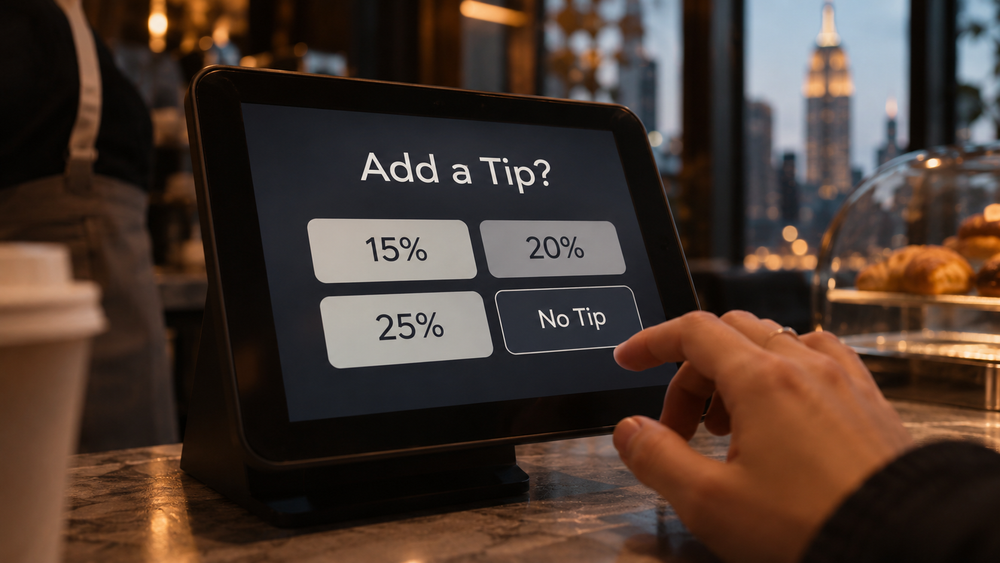
Nowadays, just stepping outside your house on any given day in New York can cost you a minimum of $100, and everywhere you go, you're being asked to tip. Your Uber, your coffee shop, your local bagel shop, and, of course, your hair salon.
I personally think it's getting out of hand.
Why am I tipping for coffee? You took my order, barely acknowledged my existence while scrolling on Instagram, like I don't see you, and now you're asking me for a tip?
Don't get me wrong, I'm all about tipping for good service, but I want to receive the service before I consider what percentage I want to tip. I don't want to be told by a screen in front of me, preventing me from finishing my transaction until I make a selection.
In the service industry (and restaurants, too), I find it different. Not because I'm in it, but because I see firsthand what happens behind the scenes.
There is actual effort and service given to the client.
Take a colorist, for example. She doesn't just mix color. There is thought, a process, application, attention, and 95% of the time, a conversation, aka therapy, lol.
The front desk goes out of its way to make the stylist's schedule work with yours. The assistants take care of your belongings, massage your scalp, bring you coffee, and make sure they're there when you need them.
It's similar in a restaurant. A waiter takes your order, gives you recommendations, confirms the food is safe for your allergies, the bartender attends to your drinks, the busboy makes sure your table is clean between courses, and again, the waiter makes sure everything is great and you're having a good experience.
In both cases, there is a relationship, a conversation, especially if you become a regular at any establishment.
On the other side of it, I've seen with my own eyes how one person put her child through college by saving her hard-earned money from tips.
She made it a point to give every client personal attention, remember their names, what they liked, how they liked it, and on top of doing an excellent job, she went above and beyond for her clients.
Her paycheck helped her support her family, pay the bills, and cover the day-to-day expenses. Her tips, saved over the years, secured her child's future and higher education.
A true story.
One time, I had a client, a very nice older lady, who wanted to tip one of the washers $4 and asked me for change.
So I asked her, nicely (mind you, we have a good relationship), to give the person the extra $1.
And I was blunt about it.
I told her, "For you, that $1 will make zero difference, but for them, it can make all the difference in the world."
She smiled and thanked me for saying it.
This 90-plus-year-old woman understood something she might have forgotten (because I know she's a generous, kind person): how money can mean very different things to different people. My goal was not to guilt or shame her, but to give her another perspective.
Now, hear me out.
Tipping is a choice, not a mandatory thing.
The person tipping should feel that the person who provided the service made an actual effort to give them good service, cater to their needs, hear their concerns, and deliver results.
And the person receiving the tip should never assume a tip is coming just because they did their job.
I understand some jobs are tip-based, and for people working in those positions, tips are an important part of their income. Missing a tip can make a real financial difference, especially when you depend on that money to pay your bills and support your family. I don't want to dismiss that reality.
But I also find that there are more generous people than not. So if a table leaves without tipping, or a few clients you spent hours on didn't tip today, I know it's disappointing, but tomorrow is a brand-new day, and you might get yours then.
Always focus on doing a good job for you, for your reputation, for your career, and to be proud of what you do, no matter what it is.
Tipping is voluntary, as it should always be. And if someone chooses not to tip, that's okay, because you also never know what situation they're in or what's on their mind.
If you receive a tip, say thank you. And if you don't, say thank you, too.
No two days are the same.
And if you're a customer, if you're happy and want to show your appreciation, well, you know what to do.
And if you're not happy, let someone know who can try to make it better for you, not so you can tip next time, but so you have a better experience next time and the business can improve.
I know I'm speaking from a New York point of view, which might be different from many people's experiences, but I think we all have feelings about tipping at some level.
And I want to hear how you feel about it.
Yours truly,
Roei Cohen
Get new posts by email
New notes on running a luxury salon, sent straight to your inbox. No spam, just what I'd tell you if you were standing on the floor with me.
Subscribe
Discussion